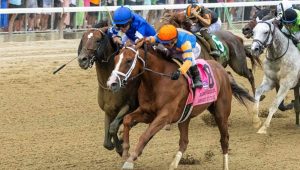
Rider’s ocular accident underscores importance of protective eyewear

Amid non-stop negotiations surrounding the need to implement better safety and wellness standards for riders, it seems one sector that may require another look is ocular health. Considering the fact that riders are exposed to the elements and surrounded by powerful equine partners, there is a plethora of ocular risks. Just recently, this was underscored by one rider’s accident. In late 2024, rider Helen Gordon suffered from a sliced eye after a piece of debris, believed to be flint, was accidentally kicked up into her eye by the horse ahead of her. This is despite the rider and her companion being at what they said was a safe distance from each other, at a decent gallop. Per doctors, the damage was so severe that they initially thought she had been kicked directly by a horse. Given that the UK has an estimated three million horse riders of varying ages and ability levels, it’s thus important to reiterate and practise proper eye protective standards. One of the best ways to do this is with the right eyewear.
How riders are protecting their eyes
Currently, it’s industry standard for riders to wear goggles during serious training sessions and race days. Made from impact- and shatter-proof materials, these goggles are designed to protect the eyes from fast-moving objects that may enter the eyes. Usually, these come with straps that can be worn securely around the head and helmet. However, brands like UVEX also offer them in wraparound styles for less intensive equestrian endeavours. That said, since this eyewear is subject to above-average wear and tear, it’s also made with precise standards so that it doesn’t accidentally cause injury. This is similar to the safety glasses prescribed to high-risk workers. For instance, construction workers use regulated eyewear that is designed not to splinter in such a way that it pierces the user and they provides enough coverage for protection.Aside from this, it’s not uncommon to see riders use other forms of eyewear during less taxing activities. The most important of these are sunglasses, which are critical tools against UV radiation. Since most courses are open, the sun can penetrate the eyes easily, causing problems like ocular burns, cataracts, and even melanoma over time. Because clear vision is invaluable to riders, you may also find that some opt for prescription sunglasses. Iconic brand Ray-Ban has shades that provide the user vision protection and correction. While they may look like regular shades on the outside, their lenses are fitted with specific eye prescriptions, so users do not need to keep switching between eyeglasses and sunglasses. For riders, this is a time-efficient boon that lets them better take stock of their responsibilities.
What more the racing industry can do
Having said this, horse racing leaders still have a lot to do to ensure that riders’ eyes are safeguarded fully. As it is, there has been much talk about long-standing gaps that leave certain critical aspects of rider wellbeing at risk. For instance, just late last year, the Professional Jockeys Association (PJA) highlighted how many racecourses still lack adequate facilities for female riders. Notably, this means that female riders don’t have their own dedicated spaces for changing, showering, and the like. Such discrepancies are not just a mark against the industry’s progress and diversity but also a risk for health and safety, given the lack of care for the unique needs of female riders. Going back to eye care, while it’s normal for riders to wear the aforementioned eyewear, their use is not as diligently recommended. As such, there are many riders who do not use said eyewear properly. Some even choose to forego them, especially since not all courses require riders to use them. To address this, it would go a long way if more officials, coaches, and course operators helped spread not only awareness but also diligence in terms of how the right eyewear matters.Follow us on Twitter racing365dotcom and like our Facebook page.
Latest
-
 Horse Racing
All you need to know about the Travers Stakes ahead of the 157th running of this legendary race
The 157th Travers Stakes, known as the...
-
Horse Racing
Greatest show on the Knavesmire – a look at the Ebor Festival’s Juddmonte International Stakes
The final weekend of August brings a...
-
Horse Racing
The royal return – A guide to the 167th King’s Plate at Woodbine
Mid-August brings peak excitement for North American...
-
Horse Racing
5 reasons why the weekend’s Whitney Stakes is a punters paradise
The midsummer meet at Saratoga Racecourse reaches...
-
Horse Racing
Speed, style, and strategy – a punter’s preview for the Stewards Cup
The historic Goodwood Racecourse is preparing for...
-
Horse Racing
Ascot’s King George VI and Queen Elizabeth Stakes preview – betting tips and track insights
The midsummer highlight of the British flat...
-
Horse Racing
2026 Juddmonte Irish Oaks preview – Elite fillies chase Classic glory
The fourth Classic of the Irish flat...
-
Horse Racing
Newmarket July Festival and July Cup – the ultimate guide
The English summer is heating up, and...
-
Horse Racing
Durban July preview – Everything you need to know about Africa’s richest race
The Durban July is set to illuminate...
-
Horse Racing
5 things you need to know about the Irish Derby at Curragh Racecourse
The pinnacle of Ireland’s Flat racing season...